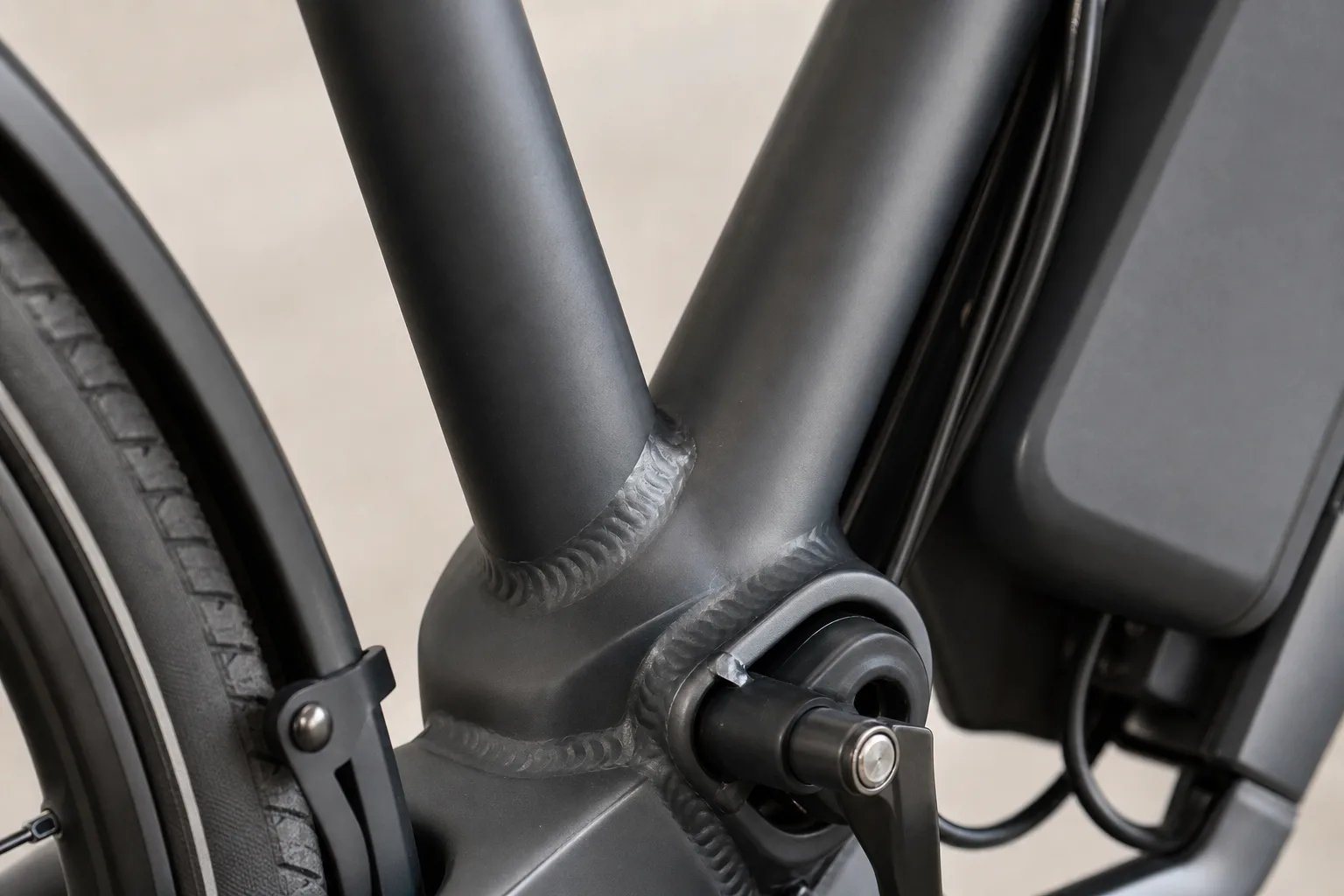
Four bikes can carry the same twenty pounds of groceries home and feel like four different machines doing it. The differences are not mysterious, and most of them come down to where the frame tubes go and how far the load sits behind the rear axle. A careful buyer can test all of it in a parking lot before signing anything, provided they know which behaviors to provoke. What follows is the order to check them in, and what a good answer feels like under your hands.
Stiffness under load, and how to feel it in a parking lot
A conventional diamond frame puts a top tube between the head tube and the seat tube, which triangulates the front half and resists twisting almost for free. Remove that tube for a step-through and the designer has to put the stiffness back somewhere, usually with a fat downtube, a doubled lower tube, or larger-diameter aluminum. Mid-step frames split the difference with a sloping tube that clears the knee but still ties the two ends together. To feel the result, load the rear rack, stand over the bike, hold the front brake, and rock the bars side to side. A frame that flexes will feel like it is arriving a half-beat after your hands.
Folding frames add a hinge in the middle of the main tube and a second one in the steerer, and both are places where play develops slowly. That is not an argument against folders so much as an argument for checking the latches. Take the bike over a curb lip at walking pace and listen. A well-made hinge is silent and a worn one clicks once per bump, which is exactly the noise a shop can diagnose and, in most cases, adjust with the cam and its locknut. Small wheels also mean the rack sits closer to the ground, which lowers the load and steadies the bike more than people expect.
Getting on when a knee objects or a pannier is full
The mounting problem is a geometry problem. On a diamond frame you swing a leg over the saddle or the rear rack, and if the rack has a bag on it, the clearance you need goes up by the height of that bag. Riders with a stiff hip or a repaired knee usually discover this the first cold morning. A true step-through drops the crossing height to somewhere around the bottom bracket, so the foot passes through rather than over. Mid-step frames sit in between, comfortable for most people who can still lift a foot to mid-shin height but not for those who cannot.
Test it wearing what you actually wear in January, with a bag on the rack, on a slight uphill slope so the bike is leaning away from you. That combination is where a marginal frame reveals itself.
Kickstands, and the moment the bike is standing still
A loaded electric bike parked on a kickstand is a lever waiting for an excuse. Single-leg stands mounted just behind the bottom bracket work fine for an empty bike and become unreliable the moment a rack bag sits high and behind the rear axle, because the load line moves outside the triangle formed by the two wheels and the stand foot. A center-mounted double-leg stand fixes most of this by lifting the rear wheel slightly and putting two feet on the ground. Ask whether the frame has the mounting plate for one, because retrofitting is easy when the plate exists and awkward when it does not.
What the loaded rack does to the steering
Weight behind the rear axle lightens the front wheel and slows the steering, which most riders read as vagueness at low speed. Front-loading racks and basket mounts bolted to the frame rather than the fork keep the mass ahead of you and out of the steering, and they suit step-through frames well because the empty front triangle leaves room. The Consumer Product Safety Commission oversees bicycle safety requirements in the United States, and rack load ratings are worth reading for the same reason: a rack rated for a given weight assumes the load is centered over it, not hanging off the back.
Ride your candidate with a sandbag or a case of water on the rack. Take a hand off the bars at ten miles an hour. If the bike tracks straight and the rear does not wag when you pedal hard, the frame, the rack and the stand are all doing their jobs, and you have your answer without needing anyone's opinion.